




Soft declines
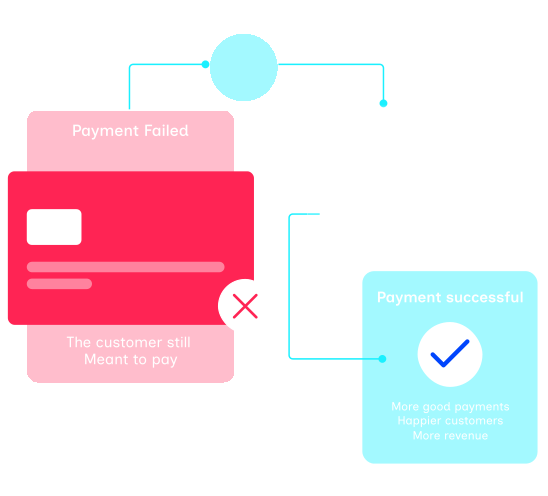
Issuer said "not now," not "never." A velocity flag or a transient hold, and the single biggest pool of recoverable revenue.
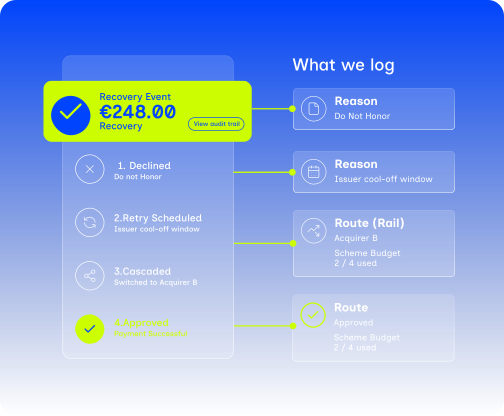
Every decline is evaluated in real time to decide whether to retry, reroute, or stop; recovering more payments without unnecessary retries.
Contact usEvery decline is analyzed before deciding whether to retry, reroute, or stop.
Issuer said "not now," not "never." A velocity flag or a transient hold, and the single biggest pool of recoverable revenue.
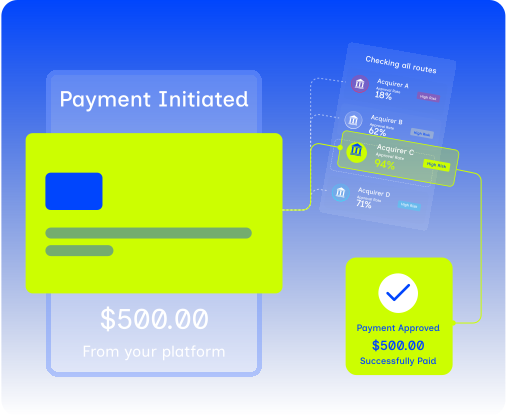
The failure is on the path, not the card. Cascade the same charge to a healthy acquirer and it usually lands.
No answer from the issuer in time. Almost always worth an immediate, idempotent retry on the same rail.
Card details moved on. Network tokens and account updater refresh them in place, no email to the customer.
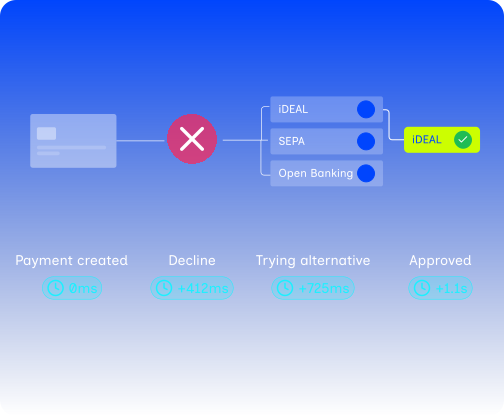
Alternative payment methods available.
Stolen, closed, do-not-honor. These do not get retried, chasing them burns scheme quota and annoys issuers.
Retries happen only when they have a higher chance of succeeding.
Recover Lost RevenueRead the decline.
Every decline is analyzed to determine whether it should be retried, rerouted, or stopped.
Retry when it'll land.
Retries happen only when timing and conditions improve the chance of success.
A second acquirer.
If one provider fails, the payment is automatically routed to the next best available one.
Inside the rules.
Every retry follows card scheme rules, merchant policies, and compliance requirements.
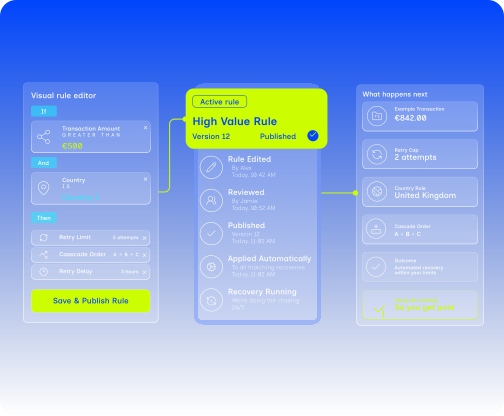
Choose ready-made retry strategies or create your own.
Each retry timed to the decline reason and the issuer's patterns. Instant, hours out, or aligned to payday, never a fixed cron that wastes attempts.
Visa and Mastercard retry caps, idempotency keys, and consent are all enforced automatically, so recovery never trips a fine or a block.
When a rail fails, the charge moves to the next-best acquirer, ranked by live approval rate and re-scored continuously.
Failed renewals worked over a recovery window, with quiet retries first and a customer nudge only when one is actually needed.
Expired or reissued cards refreshed in place through network tokens and account updater, so a stale number never costs you the renewal.
Every recovery rule is yours to configure by segment, geography, or value, and anything you change can be rolled back in one click.
Each retry timed to the decline reason and the issuer's patterns. Instant, hours out, or aligned to payday, never a fixed cron that wastes attempts.
Visa and Mastercard retry caps, idempotency keys, and consent are all enforced automatically, so recovery never trips a fine or a block.
When a rail fails, the charge moves to the next-best acquirer, ranked by live approval rate and re-scored continuously.
Failed renewals worked over a recovery window, with quiet retries first and a customer nudge only when one is actually needed.
Expired or reissued cards refreshed in place through network tokens and account updater, so a stale number never costs you the renewal.
Every recovery rule is yours to configure by segment, geography, or value, and anything you change can be rolled back in one click.
Customers see successful payments, not processor outages.
Retry and reroute automatically.
Set retry limits and recovery rules.
Review every retry, route, and outcome.
Stop reacting to the market. Start orchestrating it.
Contact us